Why Women-Only Paddleboarding Groups Work
You pull into the launch lot with a board you're not sure you inflated enough. Everyone else seems to know each other. Someone's already on the water making it look easy. You consider sitting in your car for a while.
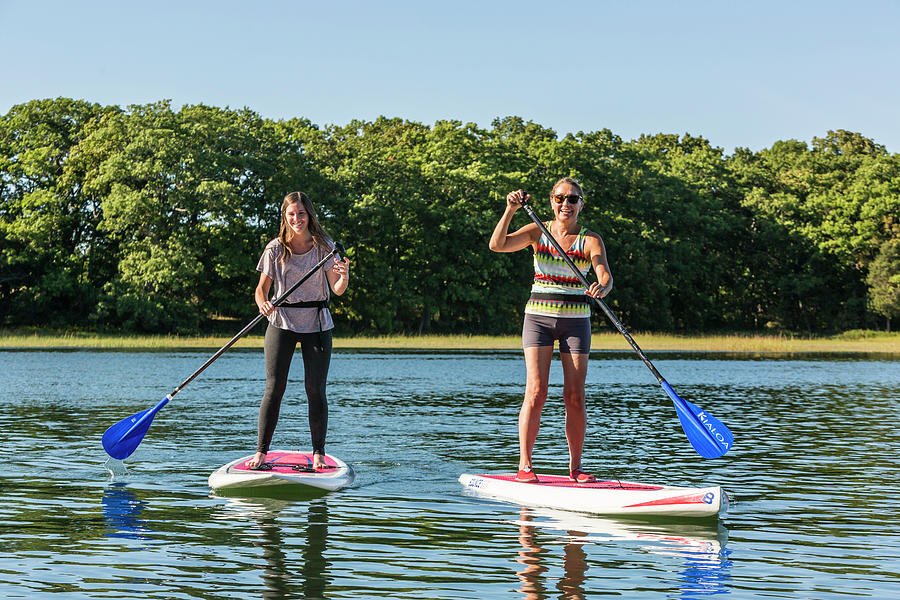
That moment is exactly why women-only paddleboarding groups exist, and why they work. They remove the two biggest things that keep new paddlers at home: the fear of looking like you don't know what you're doing, and having nobody to go with. Show up, find other women who are there for the same reason, and the pressure drops fast. You don't have to be good. You just have to be there.
Why do women prefer women-only paddle groups?
Ask Michala the women who started 757 SUP Girlies in Hampton Roads, Virginia, and she'll tell you it wasn't one big moment. It was a feeling that kept growing. She loved being on the water and figured plenty of women in her area wanted to try paddleboarding but had no one to do it with. So she built the group she would have wanted to join.
Her take on why these groups catch on is simple. Women value a space where they feel comfortable, supported, and accepted. Nobody is competing or trying to impress anyone. Everyone is there to try something new, or share their passion with other women, and that makes it much easier to step outside your comfort zone.
Beginners learn faster when they're relaxed, and people relax when they're not performing for an audience. Fear makes people stiff, and a stiff paddler falls in more. Fun is a legitimate teaching tool.
What actually changes when you come anyway?
The biggest shift Michala sees is confidence. Women often join thinking they'll paddle and go home. Then they start talking to people, trying new launch spots, getting steadier on their boards, and realizing they can handle more than they believed. .
The best version of this is when a member who was nervous to show up alone becomes the one texting a newcomer to say come to the next meetup. Her favorite thing to watch is the shift from "I almost didn't come" to "I'm so glad I came." Members who start as strangers recognize faces after a few meetups, and the group stops feeling like an event and starts feeling like a place they belong.
The group also grows past the schedule. She loves seeing members make their own plans, find paddle buddies, and introduce themselves to new people. That's when a paddling group becomes a community.
And that has a practical upside beyond the social side. A paddle buddy is a safety asset. Paddling with other people beats paddling alone, and a group makes it easy to always have someone nearby.

What if I'm nervous, or my gear isn't great?
Her answer is the title of this article: COME ANYWAY.
You don't need to be an expert, athletic, or confident. You don't need the best board or a friend who already paddles. Bring your board, bring your girls, or come solo, and you'll figure it out together.
I'll add the part she'd probably agree with. "Figure it out" doesn't mean wing it on safety. Wear a leash and a properly fitted life jacket, check the forecast, and ask questions on the beach. A good group makes asking easy, and nobody should make you feel silly for it. Everyone has fallen in. Most of us have fallen in while someone was filming.
How do you find a good women's paddle group?
Start with a search for your area plus "women's paddleboarding group," then check Facebook and Instagram, where most of these groups organize. Local paddle shops are worth a visit too, since they usually know who's running paddling groups.
Before you commit, look for a few things:
Clear info on where and when they meet
A welcome for all levels, including people who don't own a board yet (ask the organizer if they have a spare you could borrow)
Members who actually talk to each other online
Basic safety expectations, like life jackets and leashes
If nothing exists near you, take a page from Michala’s playbook. She said it taught her that sometimes you just have to start something, even if you don't know what it'll become, because you never know how many people are looking for the exact thing you were. Post a date, pick an easy launch, and see who shows up.
What's the next step?
Paddleboarding gave Michala a reason to slow down, get outside, and enjoy where she lives. Starting the group turned that into connection with women she probably never would have met otherwise.
Michala’s advice to anyone on the fence is the same one I'd give: don't wait until you feel ready. Nobody ever does. You might find a new hobby, meet some great people, gain a little confidence, or just have the best morning you've had in a long time.
If you're in Hampton Roads, come paddle with 757 SUP Girlies. If you're somewhere else, go find your version of them.
FAQ
Do I need experience to join a women's paddle group?
No. Most groups, including 757 SUP Girlies, are built for people who are just starting out. Confirm with the organizer if you're unsure.
Do I need my own board?
It depends on the group. Some meetups expect you to bring one. Ask the organizer before you show up, and check whether a local shop offers rentals.
Is it safe to paddle with a group?
Paddling with others is generally safer than going alone, since someone is always nearby if something goes wrong. You still need a leash and a properly fitted life jacket, and you should check conditions before you launch.