
How to Buy a Kids SUP
Getting Your Kid Their Own Board: How to Buy a Kids SUP
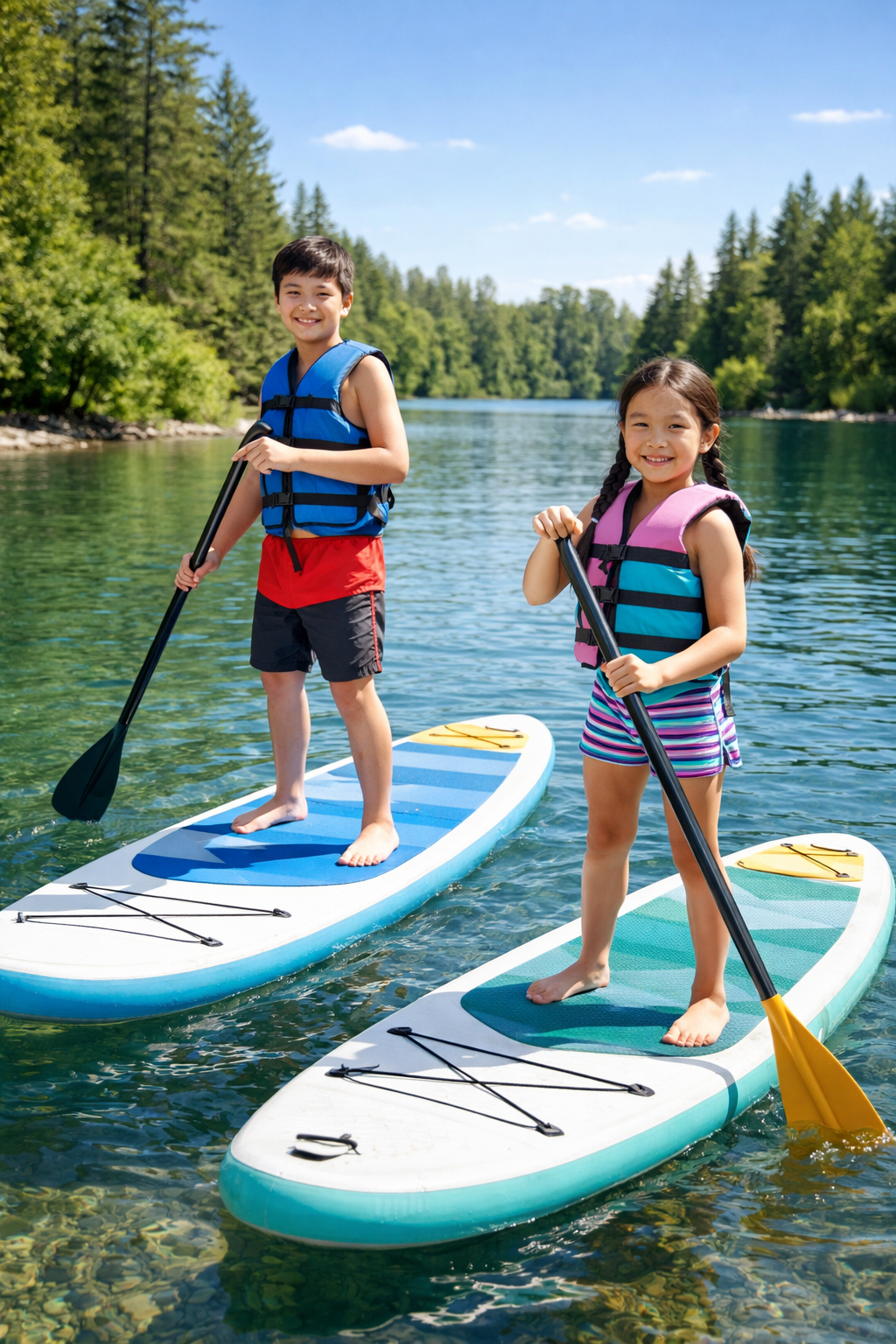
There's a moment every paddling parent knows. Your kid has been riding up front on your board for two seasons, they're getting bigger, more confident, and increasingly annoying about wanting to paddle on their own. That's the cue. Time to get them their own board. But buying a kids SUP is a little trickier than it looks, because the wrong board will kill their enthusiasm faster than cold water in April. Here's what actually matters.
What to Look For
The single most important thing in a kids board is fit. An adult board isn't just big, it's genuinely hard for a small paddler to manage. The extra length and width means they can't reach the water efficiently on each stroke, they can't turn with any ease, and they wear themselves out just trying to keep up. For kids under about 100 pounds, you're generally looking at something in the 7'6" to 8'6" range, around 29 to 30 inches wide. That width gives them real stability without making the paddle reach feel like they're doing jumping jacks. Thickness matters too, especially for smaller riders: a 5" thick board sits lower to the water than a 6" board, which lowers the center of gravity and makes balancing noticeably easier. For inflatable boards, also make sure the weight limit is realistic with a little room to spare. Manufacturers sometimes lowball capacity numbers, but you don't want your kid riding a board that's working hard just to keep them floating.
Beyond fit, think about durability and what the kit actually includes. Kids are harder on gear than adults. Boards take hits. They get dragged across parking lots and dropped on docks. A soft top hard board is naturally more forgiving when someone falls on it or into it, which matters in the learning stages. For inflatables, double-layer PVC construction holds up better than single-layer, and it's worth checking whether the fins are the kind that can be lost and replaced or permanent fixtures. A complete kit with an adjustable kid-sized paddle is worth paying for upfront. A paddle that's too long or too heavy will teach them bad habits and wear them out. The board is half the equation; the paddle is the other half.
HUGE Selection available at Amazon
We know Amazon has everything, and SUPs are no exception. Take a stroll though all the Amazon selection but if you are looking for a known brand with a reputation keep scrolling down.
Under 120 lbs: The Little Shredders
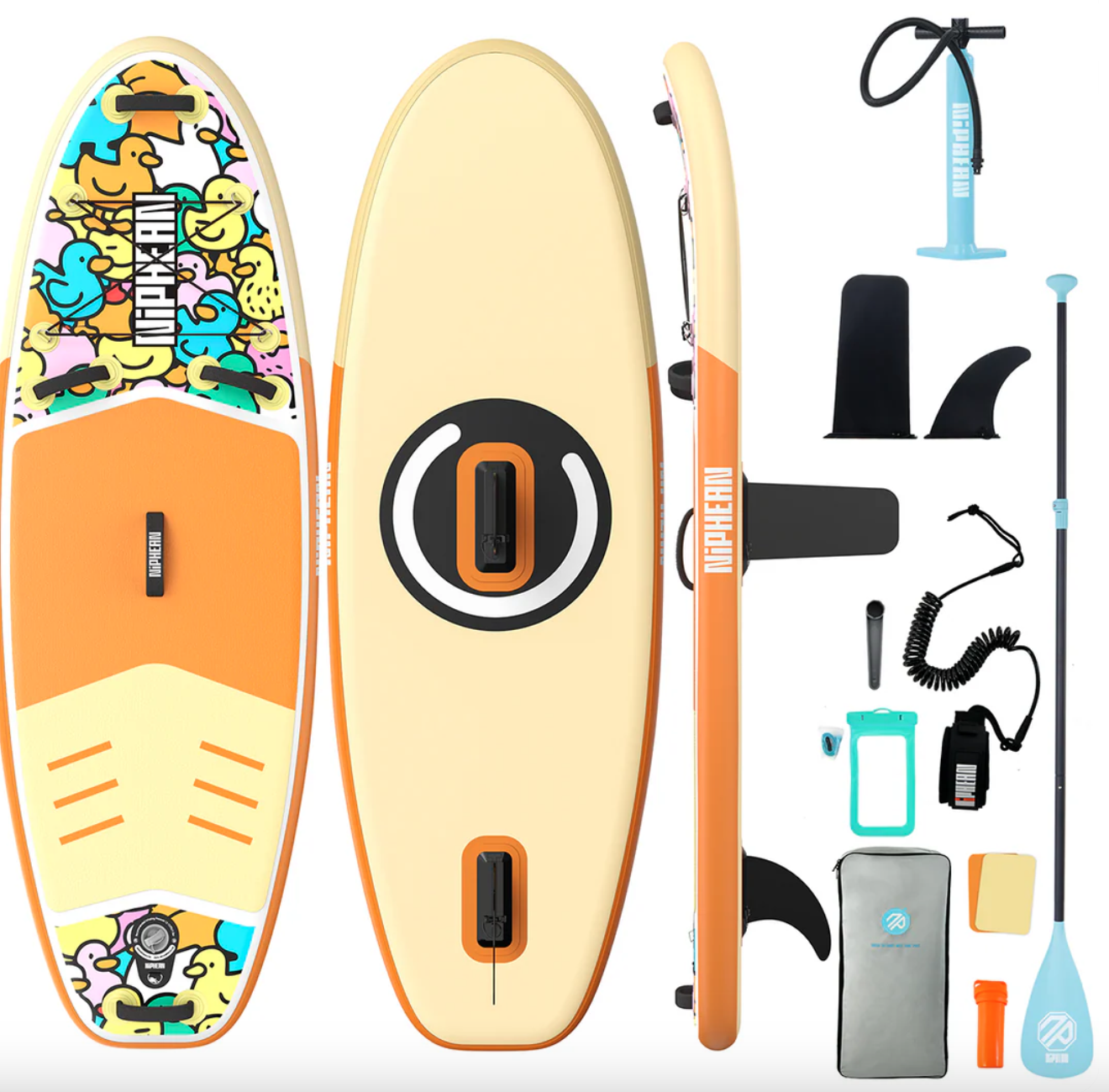
Niphean All Around 7’6” (Inflatable) | $219 for package
The Niphean Classic 7'6" is a compact inflatable SUP built for kids, youth, and lighter adults (less than 160lbs). It's built with military-grade dual-layer PVC, inflates to 15 PSI for a hard-board feel, and comes with everything you need out of the box: paddle, fins, leash, pump, bag, waterproof phone pouch, and repair kit. At least 50% recycled materials with legit certifications backs up the eco claims. The 3-year warranty is better than most at this price, budget for an electric pump and possibly a better bag. Get the size right and it's a solid buy for your little paddler.
Retrospec Weekender Nano 8' (Inflatable) | ~$200–$230
This is the budget-friendly pick that doesn't feel cheap. At only 12.2 pounds, the Weekender Nano is light enough for kids to actually manage it themselves, which matters a lot when you're trying not to carry everyone else's gear to the water. The thinner 5" profile lowers the paddler's center of gravity, which increases stability and makes it easier for kids to climb back onto the board after falling off. It comes with an adjustable paddle, pump, fins, leash, and a kids-sized backpack, so the whole kit is ready to go. Honest value for a first board, and a realistic option if you're not sure how committed your kid is going to be yet.
Pau Hana Grom X 8'0" (Hard Board / Soft Top) | ~$350–$400
If your kid is ready for a real board and you want something that will hold up for years (and can even pass on to a younger sibling), the Grom X is the hard board answer. At 8'0" long and 29" wide, it provides excellent stability while maintaining a performance-oriented shape that allows for progression in both flatwater and small surf conditions. At 16 pounds with a recommended rider weight up to 110 lbs, it's light enough for younger kids to carry independently. The full EVA soft top deck means the inevitable wipeouts are a lot kinder than a hard epoxy surface. This one doubles as a legitimate surfing option once they build their skills, so it grows with them into small waves, not just flat water.

use this link for all things REI to keep this blog free
Over 100 lbs: Upper Elementary and Younger Teens
Thurso Surf Adept 9' (Inflatable) | ~$550
This is consistently one of the best youth SUPs on the market, and the specs back it up. At 9 feet long and 28 inches wide with up to 120 lbs capacity, it bridges the gap between kids and adult boards for riders ages 10–16. It's built with the same double-layer PVC and woven drop-stitch construction as Thurso's adult lineup, so it's not a toy. It comes packed with front and rear bungee rigging, D-rings for accessories, and even a GoPro mount, which, let's be honest, your kid will care about more than you do. A carbon hybrid paddle is included. The standard US fin box and click-fin side fins are far more practical than proprietary setups, and easier to replace if a fin gets lost, which it will.
Thurso Surf Waterwalker 120 10' (Inflatable) | ~$400
For a bigger or more serious young paddler, this is the grow-with-them board. At 10' x 30" x 4.7", the Waterwalker 120 is sized for smaller paddlers but carries a listed rider weight capacity of 150 pounds, which means it has real shelf life through the teen years. It's a full-featured all-around SUP with cargo areas, paddle holders, kayak seat compatibility, and Thurso's cross-woven drop stitch core. Your kid will not outgrow this board in a season. If they stick with paddling, this thing will be in your garage for a decade.
One More Thing
No matter what board you land on, make sure your kid has a properly fitted PFD (life jacket) before they touch the water. Doesn't matter how well they swim. That part's non-negotiable. Once that's sorted, get them out there and let them figure the rest out on their own. The learning curve is short, the payoff is long, and watching your kid paddle away independently for the first time is one of those moments that makes all the gear research worthwhile.
