Self-Rescue Basics Every Paddler Should Know
You're going to fall in. Not maybe. Not if you're unlucky. You just are. And when it happens, the difference between a quick recovery and a long, exhausting swim back to shore comes down to whether you've practiced a few simple moves when the stakes were low.
Self-rescue isn't dramatic. It's not a YouTube-worthy moment. It's the practical stuff that keeps a fall from turning into a statistic. The kind of thing you practice once in flat water on a sunny afternoon so that when the wind picks up or your legs cramp or you misjudge a wake, your body already knows what to do.
Here's what actually matters.
Getting Back on Your Board (The Right Way)
Most people who fall off try to haul themselves up from the side like they're climbing out of a pool. That's the hard way. You're fighting physics, your board is not stable, and you end up doing this sad bicycle kick while your paddling buddies pretend not to watch.
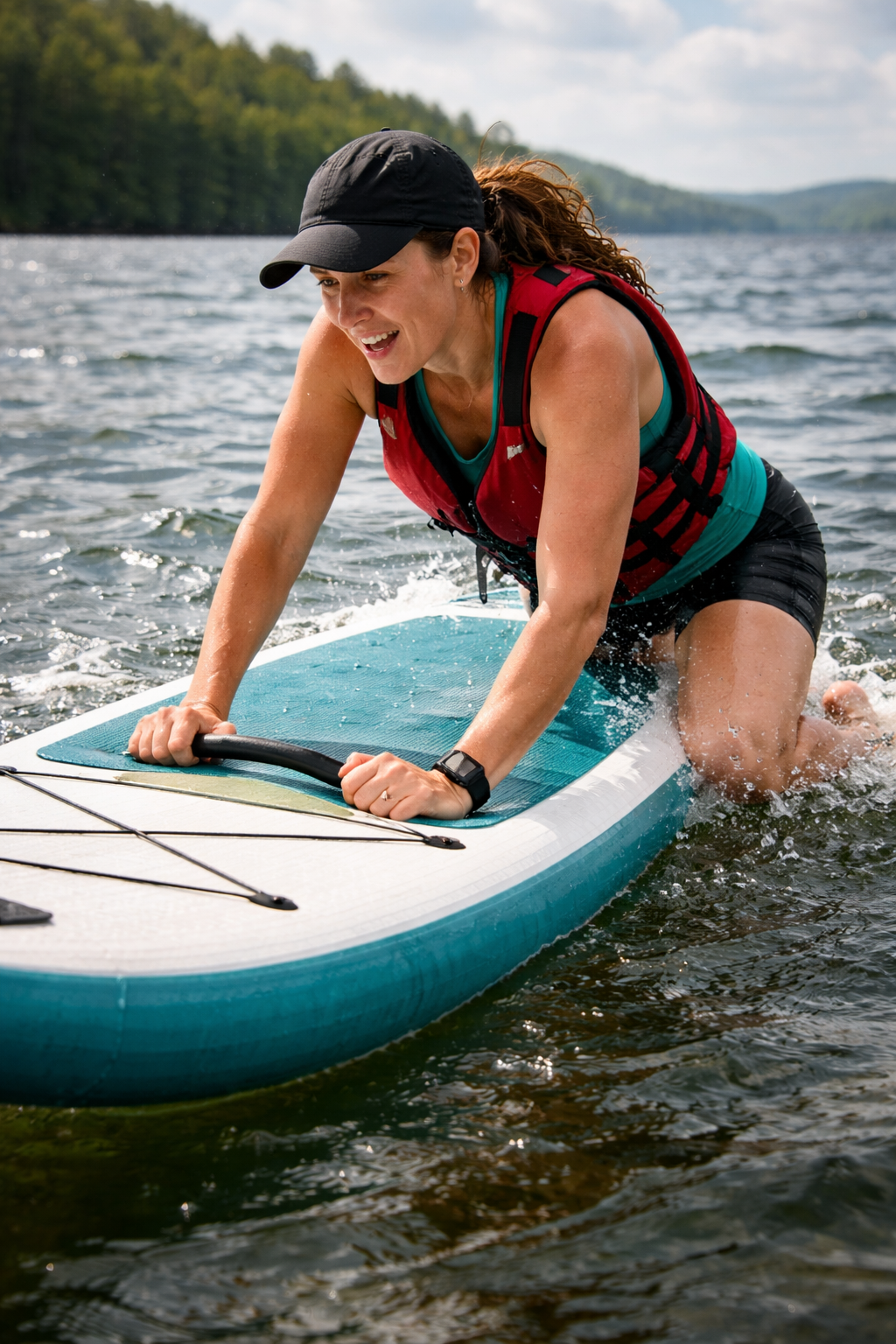
Here's the better way: swim to the center of your board where it's widest and most stable. Grab the carry handle. Kick your legs up to the surface behind you so your body is horizontal, then pull yourself forward onto the deck in one smooth motion. Think of it like sliding a spatula under a pancake. This will create less thrashing and more smooth self rescue.
If that still doesn't work, just belly flop onto the thing. Elegance doesn't matter. Getting on the board matters. Once you're on your stomach, you can shift your weight, get to your knees, then stand up. The whole sequence takes about ten seconds once you've done it a few times.
What to Do If You Lose Your Paddle
First, don't panic. Your leash keeps your board attached to you, which means you're not swimming for shore. But your paddle might drift, especially if there's any wind or current.
If it's close, lie flat on your board and hand paddle back to it, using your arms. You'll look ridiculous, but you'll get there.
If the paddle is gone, really gone, switch to prone paddling and head back to shore. Lie on your stomach, center your weight, and paddle with your arms. It will be much slower, but it works fine. Not ideal, but also not the end of the world.

support this free blog and shop this iRocker link for a new board.
Why Practice Matters
None of this is complicated. But knowing it in theory and being able to do it when you're cold, surprised, and slightly annoyed at yourself are two different things.
Now it’s time to get out and practice. Pick a calm day, paddle out somewhere with no boat traffic, then fall off your board on purpose. Practice getting back on. Toss your paddle (make sure it floats first) into the water and hand paddle back to it. Have a seat and practice stretching like you're cramping.
It'll take five minutes. Maybe ten. And it might save you an hour of struggle, or worse, the embarrassment of needing a rescue for something you could have handled yourself.
You don't get good at this by reading about it. You get good at it by doing it once when nothing's wrong.
