
SUP Winter Storage Racks
The Right Way to Store Your Board
It's late fall, the water is getting cold, and your board is leaning against the garage wall next to the snow shovel. It looked fine in September. By February, it'll have a dent, a bent fin, or a new neighbor in the form of a mouse.
Here's the short answer. Get your board off the floor and off its fin, and support it on padded arms along its length. A wall-mounted or ceiling-mounted rack does that best in a garage, and it costs far less than replacing a board. Or if it’s inflatable, deflate and roll it up.
Why is leaning your board against the wall a bad idea?
Boards are built to float and flex under your weight. They are not built to hold their shape while standing on one rail for five months.
A leaning board puts constant pressure on a single point, which is how you get dents, soft spots, and warped rails. Standing it on its tail or fin makes it worse. Concrete garage floors also hold cold and moisture, and a board sitting on one for a whole winter is not having a good time.
A rack fixes all of this. It spreads the board's weight across padded supports, keeps the fin clear, and gets the board away from the floor, where the wet, the dirt, and the critters live.
Inflatable owners, this applies to you too. Yes, your board folds up small, but a rolled iSUP shoved in a corner still gets crushed under whatever lands on it. I already covered deflating, drying, and rolling in my iSUP storage tips article, so this one is about the garage setup.
Wall rack or ceiling rack: which one fits your garage?
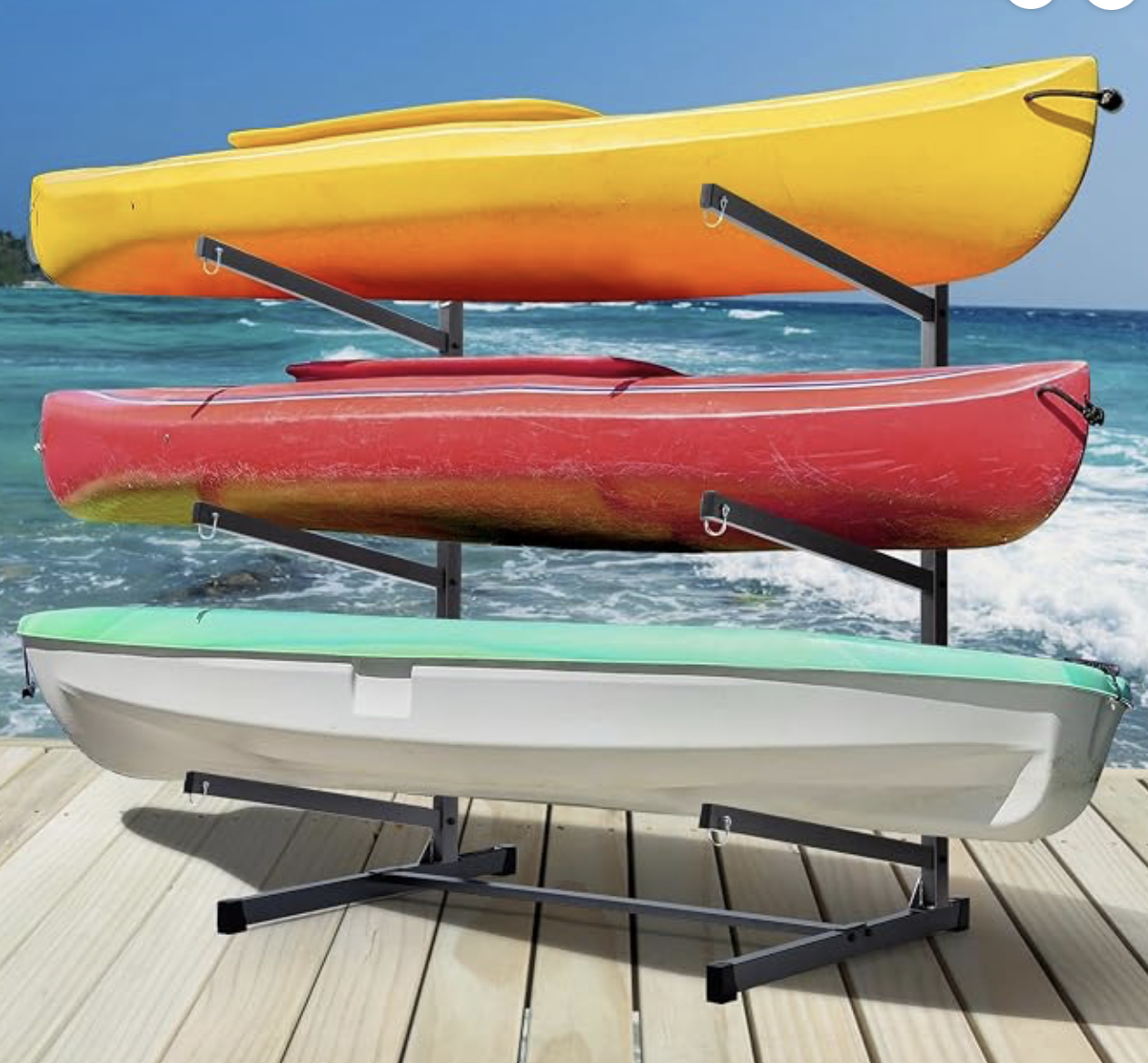
Wall racks hold the board on its side, rails resting on two padded arms. They're cheap, simple, and easy to reach. The tradeoff is wall space. A 12 to 14 foot board needs a real stretch of wall, and the arms have to go into studs. Drywall anchors are not a plan.
Ceiling racks and hoists use the space you're already ignoring. Boards go up overhead, out of the way, and your car keeps its parking spot. The tradeoff is installation. You need solid joists, enough clearance for your garage door tracks, and a little patience with a ladder. Lifting a 30 pound board over your head is also a workout, so be honest about your shoulders.
Freestanding racks need no installation at all. They take floor space, but they work for renters, and some roll around on casters. Check your floor first, since casters can mark softer surfaces.
What gear should you actually buy?
I'm not going to crown one winner, because your garage decides this, not me. I haven't load-tested every product below, so check weight capacity and mounting specs on the manufacturer's page before you buy. Anything that holds your board overhead deserves a read of the fine print.
If you've got one or two boards and a bare wall: Look at StoreYourBoard's wall racks, Suspenz's wall racks, or Sparehand's double SUP wall mount. They're padded, they hold boards horizontally, and they're built for garages.
If floor and wall space are both tight: A ceiling mount like StoreYourBoard's garage ceiling rack gets boards overhead. Measure your joists and your garage door clearance before you order.
If you can't drill into anything: A freestanding double stand, like Suspenz's Double-Up SUP Stand, works for two boards without a single hole.
If you're on a budget: Basic padded wall cradles from brands like Extreme Max cost a fraction of the premium options. They'll do the job if you hit studs and pad the contact points.
Whichever you pick, use padding on every point that touches your board, and never let a rack arm support the very end of the nose or tail.

keep this newsletter free by shopping these links for your SUP gear
How do you set it up right?
Mount the arms into studs or joists, and space them so the board is supported along its length, not just at the ends. Put the board on its back, with the fin clear. Leave a few inches of space around it so air can move and nothing rubs.
Keep the board away from space heaters and the garage's dusty corners. Winter cold won't hurt a dry board, but trapped moisture will, so dry it completely before it goes up. A slightly damp board plus a closed garage equals a science experiment by March.
Quick FAQ
Can I store an inflatable paddleboard on a rack?
Yes. Partially inflated is fine on a rack, but deflated, rolled loosely, and laid flat is the safer choice for long storage.
Is it okay to store a SUP outside under a cover?
It's not ideal. UV and freeze-thaw cycles are tougher on a board than a closed garage. If a garage isn't an option, use an outdoor-rated rack and a breathable cover.
How many boards can one rack hold?
Depends on the rack. Check the listed weight capacity, and remember that two boards plus paddles adds up faster than you'd think.
Ready to sort the rest of the garage? Read my Off-Season Storage: Preparing Your Board for Winter guide for the cleaning, drying, and inspection steps that happen before the board goes up on the rack.
