
Stop Using Your Weather App for Paddle Boarding
Your Phone Knows More About Wind Than You Do
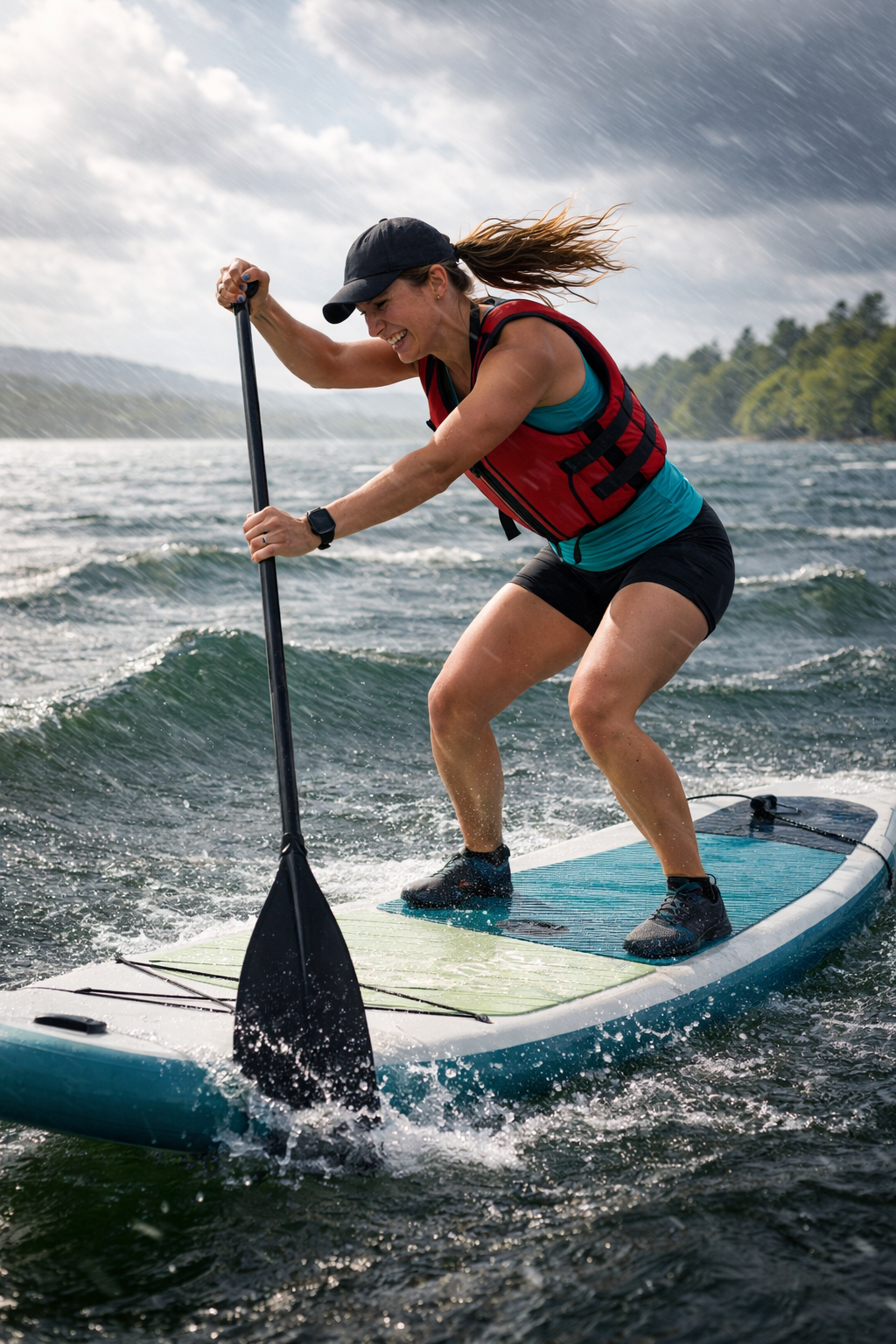
Most paddlers check the weather app on their phone, see "partly cloudy, 12 mph," and head to the water. Then they spend an hour grinding upwind into a headwind that their weather app absolutely did not warn them about. The regular weather apps on your phone are built for people deciding whether to wear a jacket. You need something built for people deciding whether to get on the water at all. The good news is that these tools exist, they're mostly free, and they're not complicated once you know what to look for.
Why Wind Direction Matters as Much as Speed
Before getting into the apps, you need to understand one thing that will change how you read any forecast: direction is everything. Wind speed tells you how hard it's going to be. Wind direction tells you whether hard is dangerous.
Onshore wind blows from the water toward the land. If you get in trouble, it pushes you back toward shore. Annoying to paddle into? Yes. Stranding you a mile offshore? No. Offshore wind blows from the land out to sea, which sounds peaceful and calm when you launch from a sheltered beach. The problem is that if you get tired, get knocked off your board, or lose your paddle, that same wind that felt like nothing when you started is now slowly pushing you away from everything. For beginners especially, offshore wind is the one to take seriously. If the forecast shows wind blowing away from shore and you're not an experienced paddler, consider that your cue to pick a different day or a different spot.
As a general wind speed reference for SUP:
Under 10 mph: Comfortable for most paddlers, good learning conditions
10-15 mph: Manageable for intermediates, choppier water, more effort required
15-20 mph: Challenging, only for experienced paddlers who know the location
20+ mph: Stay home. This is not a badge-of-honor situation.
Windy.app: The One You Actually Need

Windy.app (available on iOS and Android) is the closest thing to having a meteorologist in your pocket, and it's the app most serious paddlers end up using once they outgrow the basic weather check. The animated wind map alone is worth downloading it for. Instead of just telling you the speed and direction, it shows you wind moving across the map in real time, so you can actually see where it's coming from and how it's flowing around landmasses, inlets, and bays near your launch spot.
Beyond wind, it layers in wave height, currents, temperature, and visibility. You can toggle between different weather models (ECMWF is generally the most reliable for planning a day out) and look at hourly forecasts broken down in detail. The webcam feature is underrated too. If there's a camera near your spot, you can see what the water actually looks like right now, not what an algorithm thinks it looks like.
The interface takes a few minutes to get used to, but once it clicks, you'll wonder how you planned any paddle without it. Free to use with a premium tier if you want deeper data.

Keep this blog free and shop using this link
Windfinder: Great for Spot-Specific Forecasts
Windfinder has been around longer than most and has a strong reputation in the wind sports community, partly because it presents data graphically in a way that's easy to read at a glance. You pull up your location, and you get a clear visual of wind speed and direction changing hour by hour through the day. The time slider feature is particularly useful for SUP planning because you can see if that 18 mph forecast is all day or just a two-hour afternoon window with calmer bookends.
Windfinder also has a solid database of saved locations including many known water sports spots, so if you paddle the same few places regularly, you can save them and get forecasts fast without fiddling with a map every time. The paid version (Windfinder Pro) adds more detailed forecast models and extended range. Worth it if you're on the water multiple times a week.
WindAlert: Simple, Fast, Reliable
WindAlert is the no-nonsense option. It pulls data from over 50,000 weather stations worldwide, including its own network of monitoring stations, and delivers wind speed, direction, and gust information quickly and cleanly. The customizable alerts are where it earns its keep. You set the wind speed threshold and location, and it notifies you when conditions hit your parameters. Useful if you're waiting for a calm window and don't want to manually check every hour.
It's not as visually rich as Windy.app, but that's fine. Sometimes you just want a fast answer. If you're a beginner who finds Windy.app a little overwhelming at first, WindAlert is a solid starting point. Use it to build the habit of checking wind before you go, then graduate to more detailed tools as your read on conditions improves.
Check Before You Go. Every Time.
The wind is going to do what it's going to do. Your job is to find out what that is before you're standing on the beach with a board under your arm, looking at whitecaps you weren't expecting. Five minutes with the right app before you leave the house is the easiest safety habit in SUP. Download Windy.app today, save your regular paddle spot, and just start looking at what the wind is doing before each session. You'll learn faster than you think.
