
Paddleboarding with Kids
Actually Fun (For Everyone)
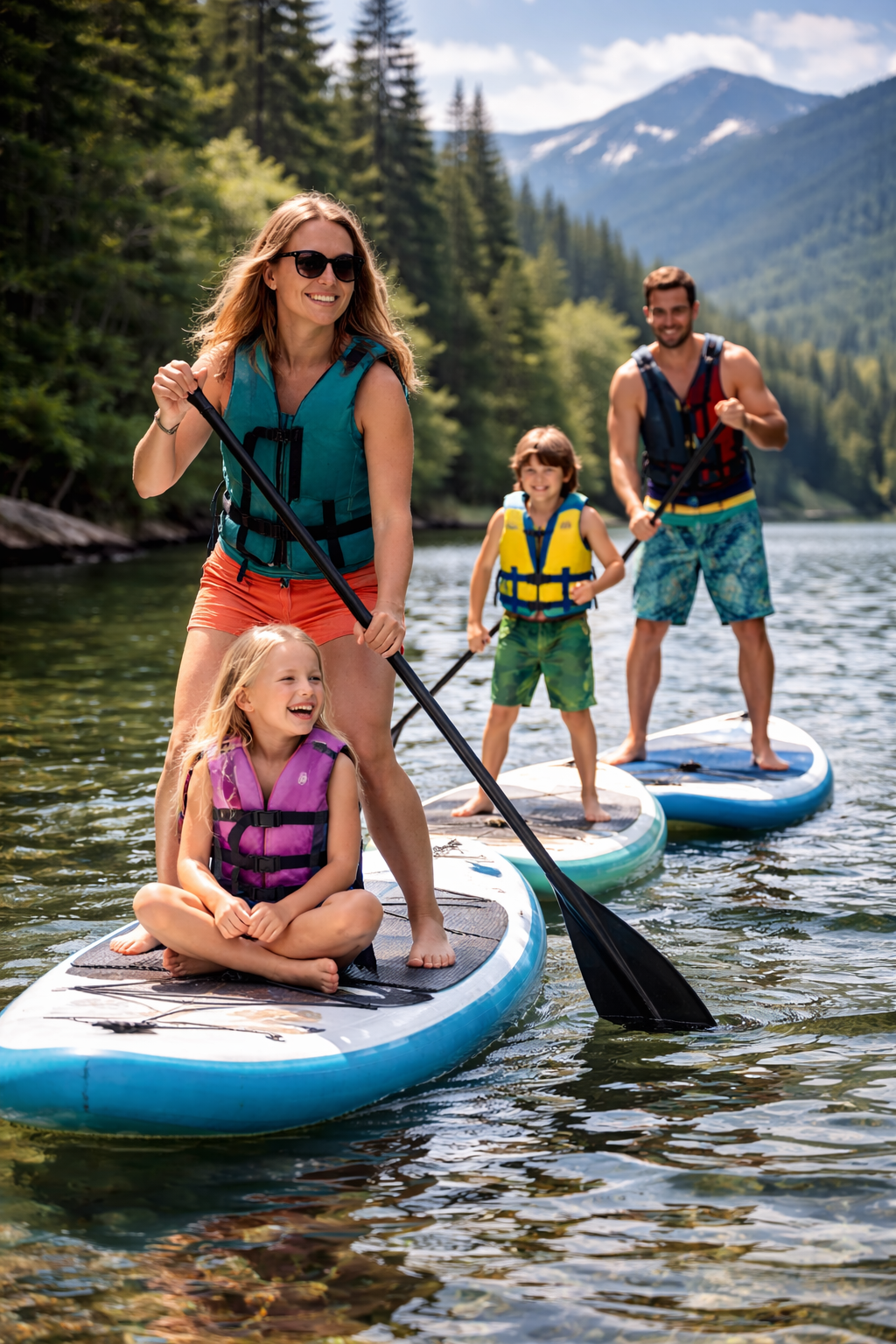
Your kid just spotted a turtle from the paddleboard, and now you're both stuck in this weird crouch-lean position trying to get a better look without tipping over. The board's rocking, your knees are screaming, but neither of you is moving because this turtle is the coolest thing that's happened all week. That's paddleboarding with kids in a nutshell: part nature documentary, part balance test, entirely worth it.
Yes, You Can Actually Do This
Paddleboarding with kids works better than you'd think. The key is starting with the right board. You need something wider and more stable than your standard performance board. Think 11 feet or longer, 32+ inches wide. These wider boards give kids room to spread out without sending everyone into the water every thirty seconds.
For younger kids (4-6 years old), they'll sit or kneel while you paddle. Around 7 or 8, most can start trying to stand with you but they may negatively effect your balance. By 10, they're often paddling their own board if they want to. But here's the thing: there's no rush. Plenty of kids are perfectly happy sitting on the front of your board playing navigator for years.
Life jackets are non-negotiable. Get one that actually fits, not one they'll "grow into." A properly fitted life jacket stays put when they move around and doesn't ride up over their ears when they're in the water.
Why It Beats Another Weekend at Home
The appeal isn't complicated. You're outside, you're moving, and you're not staring at screens. The water's calm (pick calm water, seriously), you can actually talk to each other, and there's enough going on to keep kids engaged without overstimulating them.
Kids also learn real skills without realizing it. Balance, coordination, reading water conditions, how to recover when things don't go as planned. They figure out that staying low and centered keeps the board stable. They learn what happens when they shift their weight too fast. These lessons stick because they're immediate and practical.
The wildlife factor is huge. Herons, fish jumping, crabs scuttling around pilings, turtles poking their heads up. Kids notice everything at water level. Bring a simple wildlife guide or use an app to identify what you're seeing. It turns the whole outing into a floating biology lesson that doesn't feel like a lesson.

use this link to shop REI and help keep this newsletter free
What Actually Happens
Forget complicated activities. The simplest things work best. Paddle somewhere, stop and float, watch stuff, paddle back. That's a solid outing.
If your kid wants more action, paddleboard tag works. One person paddles while the other tries to tag them by reaching from a kneeling position. Set boundaries so nobody ends up halfway across the lake. You can also do relay races if you've got multiple boards, or just see who can spot the most birds.
Older kids like the challenge of standing up and trying to paddle on their own. Start in comfortable, calm water. Let them fall. They'll figure out what works through trial and error faster than through your instructions.
Pack snacks and take a floating break. Sitting on the board, feet dangling in the water, eating crackers and talking about whatever is sometimes the best part. Just keep your trash contained. Losing a wrapper to the wind is both embarrassing and terrible for the environment.
Making It Work Without the Drama
Start in flat, protected water. A calm lake, a quiet inlet, a sheltered bay. Save the ocean paddling for when they're older and more experienced. You want boring conditions for the first few times out.
Keep trips short at first. Thirty minutes is plenty for a first outing. You can build up to longer adventures as everyone gets more comfortable. Kids will tell you when they're done, usually by getting squirrely or asking "are we almost back?" seventeen times.
Teach water safety as you go. How to climb back on if they fall off. What to do if they're tired. Why you stay with the board if something goes wrong. Make it practical, not scary. You're giving them tools, not making them paranoid.
Watch the weather. Wind picks up, you head in. Storms roll in, you're done for the day. Lightning anywhere in sight means you're off the water immediately. Paddleboarding with kids requires a much lower risk tolerance than solo paddling.
The Real Takeaway
Paddleboarding with kids isn't about creating Instagram moments or checking off achievement milestones. It's about being outside together, seeing what you find, and maybe getting better at balancing on a floating board in the process. Some days you'll paddle for an hour and see incredible wildlife. Other days you'll last fifteen minutes before someone needs to pee and you're headed back to shore. Both count as success.
The main thing is getting out there. Pick a calm day, grab a stable board, make sure everyone's wearing their life jacket, and see what happens. Your kid might love it immediately or need a few tries to warm up to it. Either way, you're building something good: time together, comfort on the water, and stories about that turtle you saw that one time.
