
SUP with your PUP
Paddleboarding with Your Dog:
A Practical Guide to Not Getting Wet…but you probably will
You're standing on your dock, paddleboard under one arm, watching your dog stare at you with that look that says either "adventure" or "you're out of your mind." Could go either way.
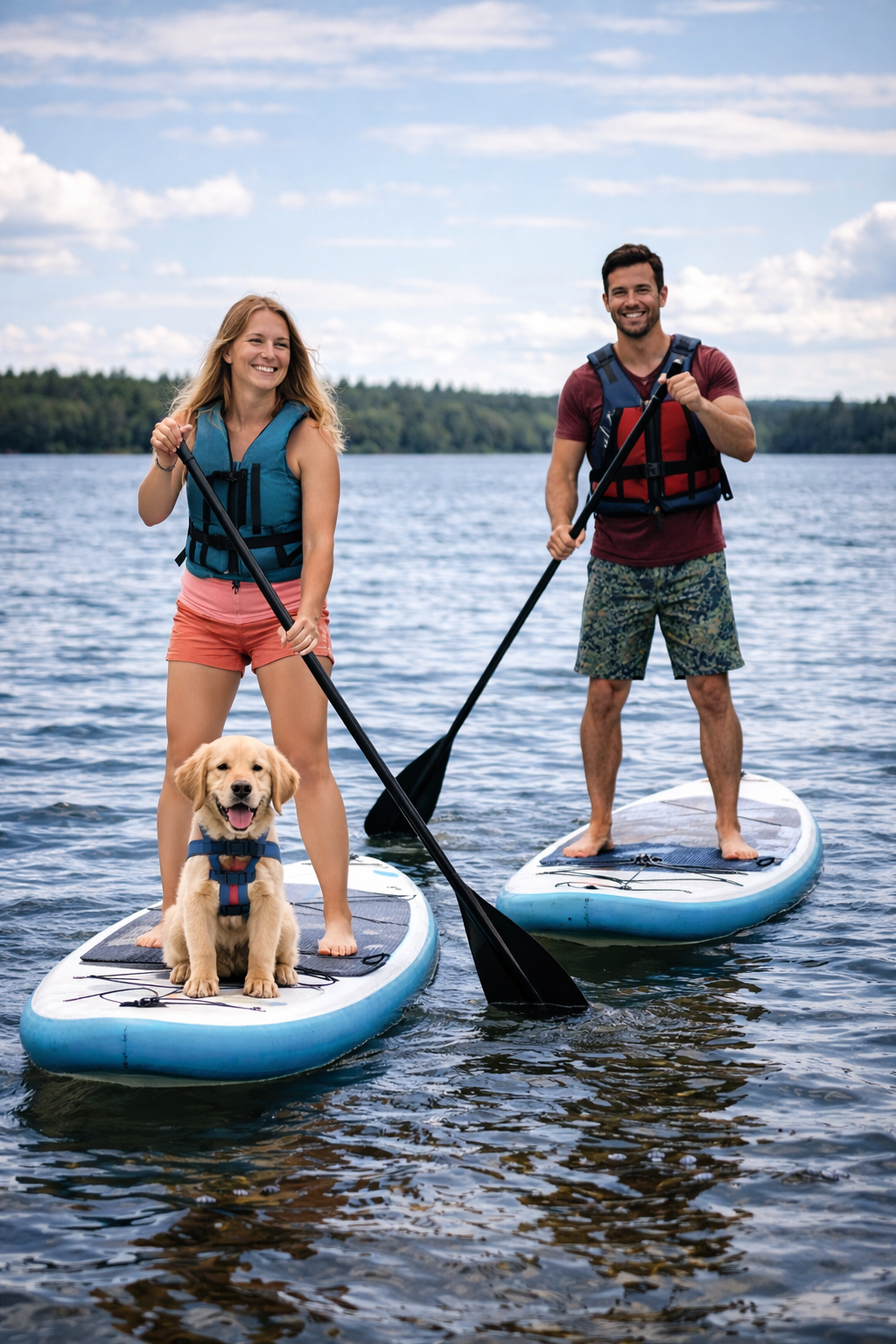
Taking your dog paddleboarding isn't rocket science, but it does require some actual preparation. Skip the prep work and you'll spend more time swimming than paddling. Here's what you need to know to make it work.
Start on Land (Seriously)
Don't just toss your dog on a board in the water and hope for the best. That's how you end up wet, frustrated, and possibly missing a dog.
Get a proper dog life vest first. Not negotiable. Even if your dog swims like an otter, things happen. Fatigue, panic, a rogue wave from a passing boat. The vest keeps them safe and gives you something to grab if you need to haul them back aboard. (add affiliate link here)
Now for the boring but essential part: board training on dry land. Set up your board at home and let your dog investigate it. Let them sniff it, walk around it, generally decide it's not a threat. Then start rewarding them for hopping on. Repeat this until they're comfortable enough that getting on the board becomes routine, not stressful.
Do this while they're wearing the life vest too. You're building trust here, showing them that this weird floaty thing and that annoying vest mean good things, not danger. When you finally hit the water, they'll already know the drill. Patience at this stage saves you a lot of chaos later.
The Right Board Matters
You need a stable platform, which means wide. A narrow performance board designed for speed will dump you both in the water faster than you can say "bad idea." Look for boards with extra width and volume that can handle the combined weight plus the inevitable movement of a dog who just spotted a duck.
A good traction pad is critical. Dogs need grip just like you do, and a quality deck pad keeps them from sliding around. Some boards come with extended pads that cover more surface area, which helps if your dog likes to wander. (add affiliate link here for stable boards)
SUP vs Kayak: Which Works Better?
Paddleboarding wins on stability and interaction. You've got a wider platform, more room for your dog to shift around, and you can actually see and respond to what they're doing. You're standing up, which gives you better control and the ability to move with your dog's weight shifts.
Kayaking locks you into a seated position with limited mobility. If your dog decides to investigate something or gets nervous, you're working with a lot less flexibility to manage the situation.

Shop for your outdoorsy dog gear here and keep this blog /newsletter free
Leash Rules
Use a leash. Yes, even if your dog has perfect recall on land. Water changes things, and instinct can override training faster than you think.
Keep it short, around 4 to 6 feet. Long leashes create entanglement hazards with your paddle, your legs, or the board itself. Attach it to a secure point on the board, not to yourself. If your dog goes overboard, you don't want to follow automatically. Check out this water proof leash from WilderDog for a quality product perfect for this situation.
Some boards have built-in leash attachment points. Use them. If yours doesn't, rig something solid that won't pop loose under tension.
What Actually Happens
First trips are usually messy. Your dog might be nervous, excited, or both. Stay close to shore and keep sessions short while they adjust. Bring water and a portable bowl because they'll get thirsty, and bring treats for positive reinforcement when they do something right.
Expect them to move around more than you'd like at first. That's normal. As they get comfortable, they'll settle. Most dogs figure out pretty quickly that sitting or lying down in the center of the board is more comfortable than trying to patrol the perimeter.
The Bottom Line
Paddleboarding with your dog is absolutely doable, but it takes some upfront work. Train on land, get the right gear, pick a stable board, and use a leash. Skip any of these steps and you're setting yourself up for a frustrating experience.
Do it right and you've got a solid activity that gets you both outside and builds trust. Just remember: your dog didn't ask to be on a paddleboard. You're the one who decided this was a good idea, so make it worth their while.
