Why Do My Feet Hurt?
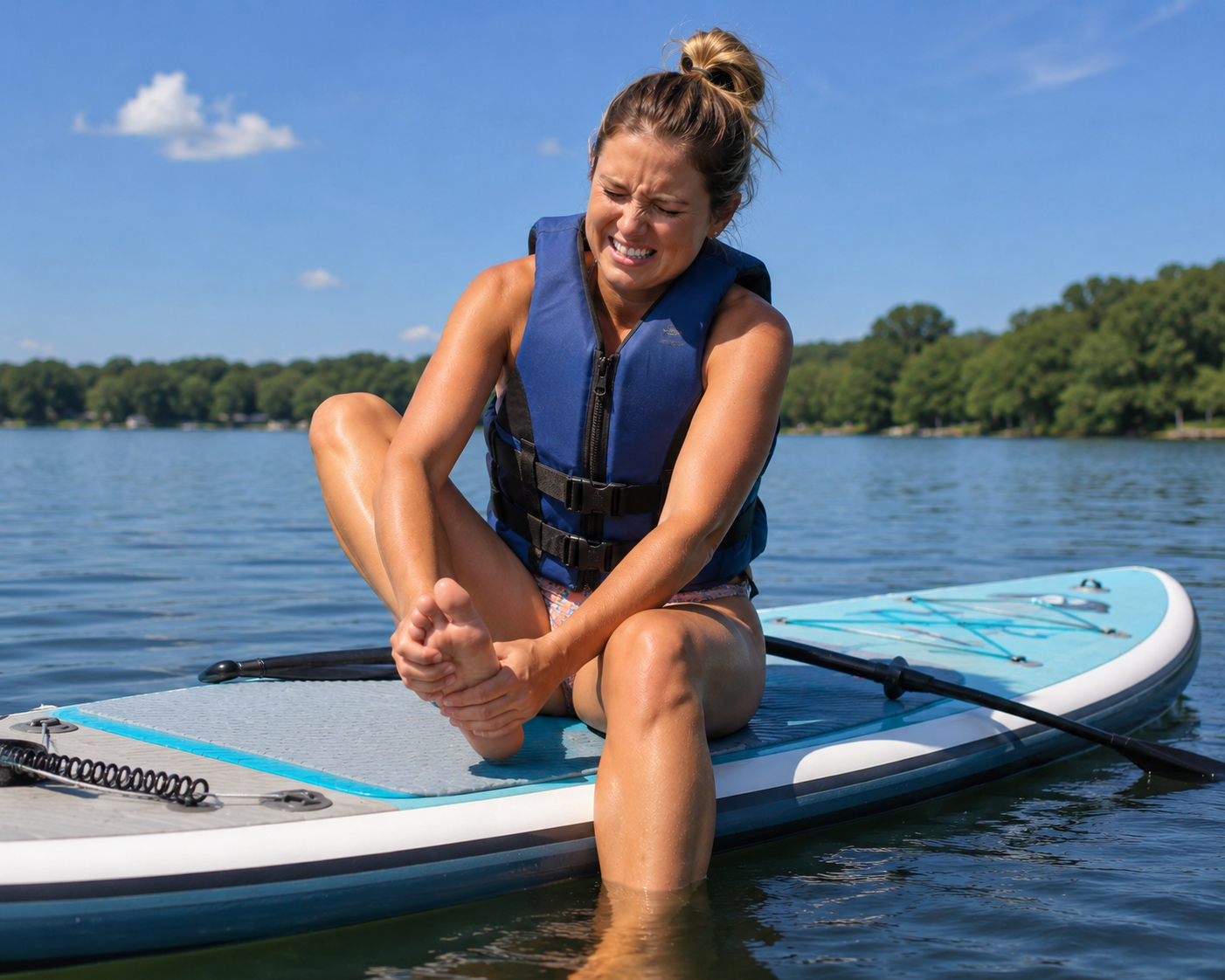
You're twenty minutes into what should be a perfect paddle session. Flat water, decent weather, not a care in the world. Then your feet start to ache. By forty-five minutes, you're thinking about bail options. By the time you hit shore, you're walking like you just finished a marathon in clown shoes.
Welcome to one of paddleboarding's dumbest little secrets: your feet hurt because they're basically being held hostage. The good news is this isn't a permanent condition or a sign that SUP isn't for you. The bad news is you've been creating the problem yourself. Here's what's actually happening and how to fix it.
Your Feet Are Trying to Hold On
The main culprit is something you probably don't even realize you're doing. When you first step onto a board, your natural instinct is to grip with your toes and feet, trying to physically hold onto the deck. Your brain sees an unstable surface and tells your feet to clench like you're trying to pick up a bowling ball with your toes.
This gripping causes the muscles in your feet to tense up and restrict blood flow, similar to making a tight fist. Stand there long enough with your feet locked in panic mode, and you've got yourself a pain problem. Add in the fact that you're standing upright with your full body weight pressing down on already tense muscles, and you've created a recipe for discomfort.
The weird part is that your feet think they're helping. They're making tiny adjustments to keep you balanced as the board moves under you. They're just doing it while strangling themselves.
The Science
Here's where it gets interesting from a physiology standpoint. Your calf muscles are often called your body's "second heart" because every contraction helps pump blood from your feet and lower legs back toward your heart. One-way valves inside your leg veins keep that blood moving in the right direction.
Paddleboarding is unusual because you're exercising while spending long periods standing in one place. Although your core, shoulders, and upper body are working hard, your ankles and calves don't go through the same repetitive motion they would during walking or running. That means the calf muscle pump may be less effective at helping blood return from your lower legs.
At the same time, your heart is pumping harder to supply your working muscles, and gravity is still pulling blood and fluid toward your feet. The combination can increase pressure in the veins of your lower legs, allowing some fluid to leak into the surrounding tissues. That's why your feet or ankles may swell after a long paddle, especially on hot days. It's usually a normal response to prolonged standing rather than a sign that you're out of shape or using poor technique.
keep this newsletter free and shop this link for dry bags and towels
What Actually Works (And What Doesn't)
The fix for this is simpler than you'd think, though it requires breaking a habit you don't know you have. First, you need to actively relax your feet. Easier said than done when your brain is screaming at you to maintain balance, but consciously releasing the death grip and wiggling your toes periodically helps restore blood flow.
Doing gentle heel raises while paddling activates your calf pump and usually clears the problem immediately. You don't need to do calf raises like you're at the gym. Just subtle movements are enough to get things flowing again. Shift your weight from the balls of your feet to your heels and back. It helps your balance and keeps your feet from going numb.
If you need to move around on your board, take small hops with both feet together instead of walking step by step. This keeps the board more stable and gets blood moving. When you're really feeling it, drop to your knees or sit down for a few minutes. Give your feet a break and let them recover.
For those dealing with pre-existing foot issues like plantar fasciitis or previous ankle injuries, wearing water shoes or booties can provide support that barefoot paddling doesn't offer. It's not standard practice, but neither is cutting your session short because your arches are screaming.
The Long Game
The more time you spend on your board, the better this gets. As your balance improves with experience, your feet naturally loosen their grip on the board. What felt terrifying and unstable during your first few sessions becomes routine. Your feet learn to trust the process instead of trying to control it through sheer muscle tension.
Off the water, there are things you can do to help. Stretching your feet and calves before paddling gives you better range of motion. Walking barefoot regularly helps strengthen foot muscles and improves balance, which translates directly to better board control. Some people swear by foot massages with a lacrosse ball or foam roller. If it feels good and loosens things up, go for it.
If you've been paddling for years and suddenly develop foot pain that won't quit, that's a different story. At that point, you're looking at possible underlying issues that need professional attention. But for most beginners and intermediate paddlers, foot pain is just your body learning a new skill. It's temporary, fixable, and doesn't mean you need to give up SUP.
Get Back Out There
Your feet hurt because they're working overtime on a skill they haven't mastered yet. Let them relax, keep them moving, and give yourself permission to take breaks. The pain isn't a judgment on your abilities. It's just your body telling you it needs a different approach.
Once you crack the code on staying loose and getting that calf pump working, you'll paddle longer and feel better doing it. Turns out the solution to sore feet isn't tougher feet. It's smarter feet.
