
Is SUP Yoga for You?
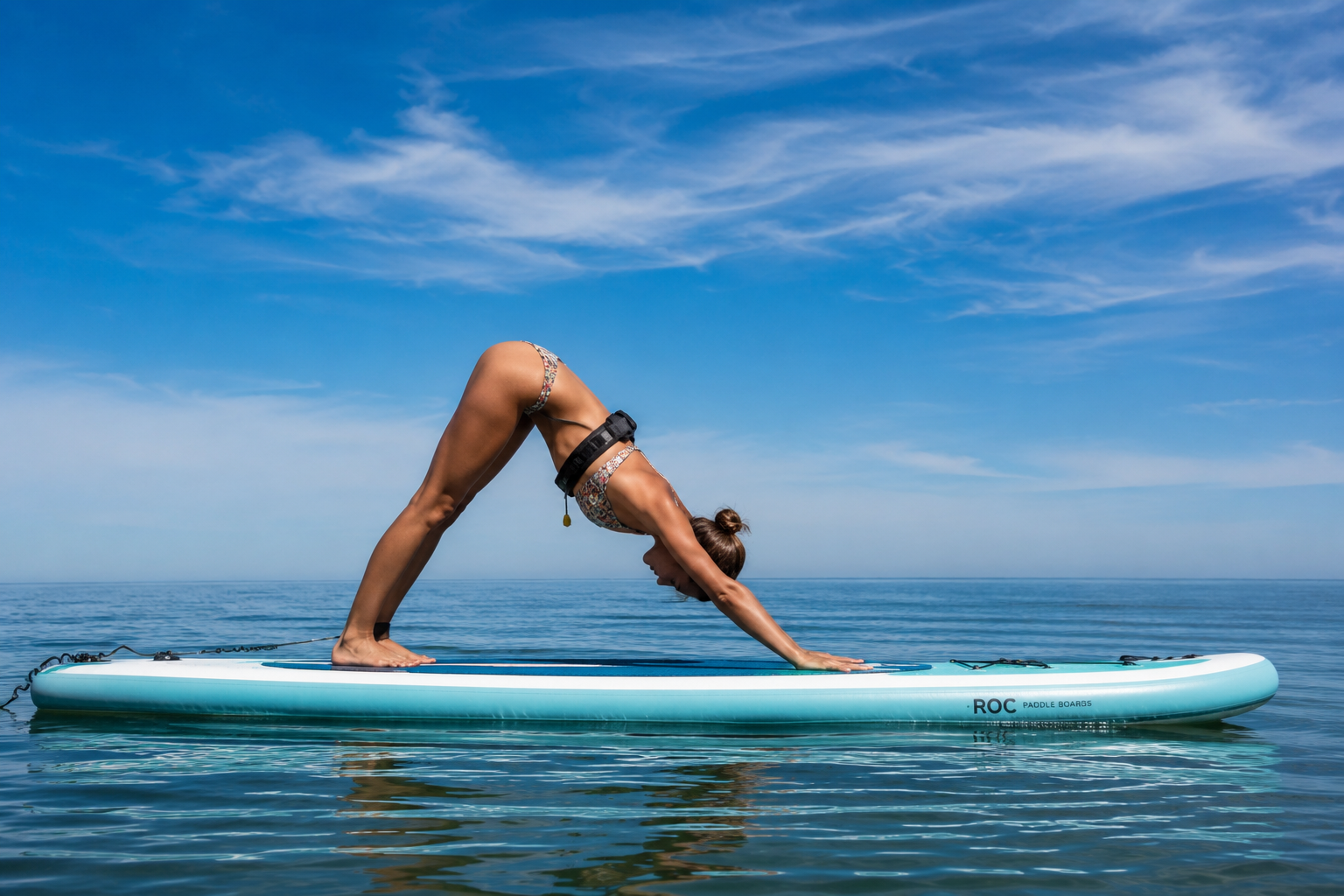
The first time I tried yoga on a paddle board, I face planted during what should have been a peaceful tree pose. My board flipped, my ego took the hit, and a couple of ducks nearby seemed genuinely unimpressed. I climbed back on laughing, because that's the deal with SUP yoga. You're going to fall. The water doesn't care about your alignment cues. And honestly, that's the whole point.
If you've seen those dreamy photos of someone in a perfect warrior pose floating on glassy water and wondered if it's actually as peaceful as it looks, let's talk about it honestly.
What is SUP Yoga?
SUP yoga is exactly what it sounds like: yoga practiced on a stand up paddle board, usually anchored or drifting slowly on calm water. Instead of a mat, your foundation is a board that shifts with every breath, ripple, and weight adjustment you make.
That instability isn't a bug, it's the feature. A pose that feels routine on solid ground suddenly demands real focus when the surface underneath you is alive. Your core works overtime, your balance sharpens, and your mind has zero room to wander off to your inbox. You either stay present or you go for a swim.
Classes typically use wider, more stable boards than what you'd paddle for fitness or touring, often with a traction pad covering most of the deck for grip during poses.
Who Should Try It
Anyone with basic paddling comfort and a decent yoga foundation is a good fit. You don't need to be advanced at either, but you shouldn't be brand new to both at the same time. If you've never stood on a board before, get some flat water paddling under your belt first. If you've never done a downward dog, take a few mat classes so your body knows the shapes before you ask it to hold them on water.
It's also a great fit for people who find regular yoga a little too still. If your mind needs a bit of external chaos to stay engaged, the board gives you that. And if you're recovering from an injury, check with a doctor first, since the added balance demand isn't nothing.

keep this newsletter free and use this link to shop paddling apparel
Why Bother?
Beyond the novelty, there's real substance here. Balancing on an unstable surface forces small stabilizer muscles to engage that a studio floor lets you ignore. Your core strength improves fast, often faster than mat yoga alone.
There's a mental piece too. Falling in front of people is uncomfortable for most of us, and SUP yoga makes you practice being okay with that, repeatedly, in a low stakes way. That carries over. People who do this regularly tend to report feeling less precious about looking silly in general, which is a nice bonus nobody talks about enough.
And frankly, being on open water beats a fluorescent lit studio most days. Sun on your back, water underneath, maybe a heron watching your crow pose fall apart. Hard to replicate that indoors.
Get the Right Board First
Not every paddle board works for this. You want something wide and stable, not a narrow touring board that'll dump you before you finish your first sun salutation. I wrote a full breakdown on picking a board built for stability if you want the specifics before you buy or rent anything.
Find Local Instruction
Don't try to freelance this from a YouTube video your first time out, especially not in open water. Look up a local SUP yoga instructor in your area. Most coastal and lake towns have someone running classes, and a lot of paddle shops can point you toward one even if they don't teach it themselves. A good instructor will anchor you in calm, controlled water and walk you through modified poses built for a moving surface, which is a very different skill than teaching a studio class.
Search around before you commit to gear or a big trip. Your local SUP yoga teacher will know the water conditions, the best times of day, and which spots stay glassy enough for beginners.
Bottom Line
SUP yoga isn't harder yoga or easier yoga, it's different yoga. You'll fall, you'll laugh, and you'll probably get a better core workout than you expected. If that sounds like a good time instead of a nightmare, find a class near you and give it a shot.
