
Should You Start SUP Fishing?
The first time I hooked a fish from a paddle board, I nearly went swimming with it. Board rocking, rod bent, dog barking from the shore like I'd made a terrible life choice. I hadn't. I was just doing it wrong.
SUP fishing looks ridiculous until it clicks, and then it's one of the best ways to fish there is. If you've been eyeing your paddle board and wondering whether it could double as a fishing platform, here's the honest breakdown.
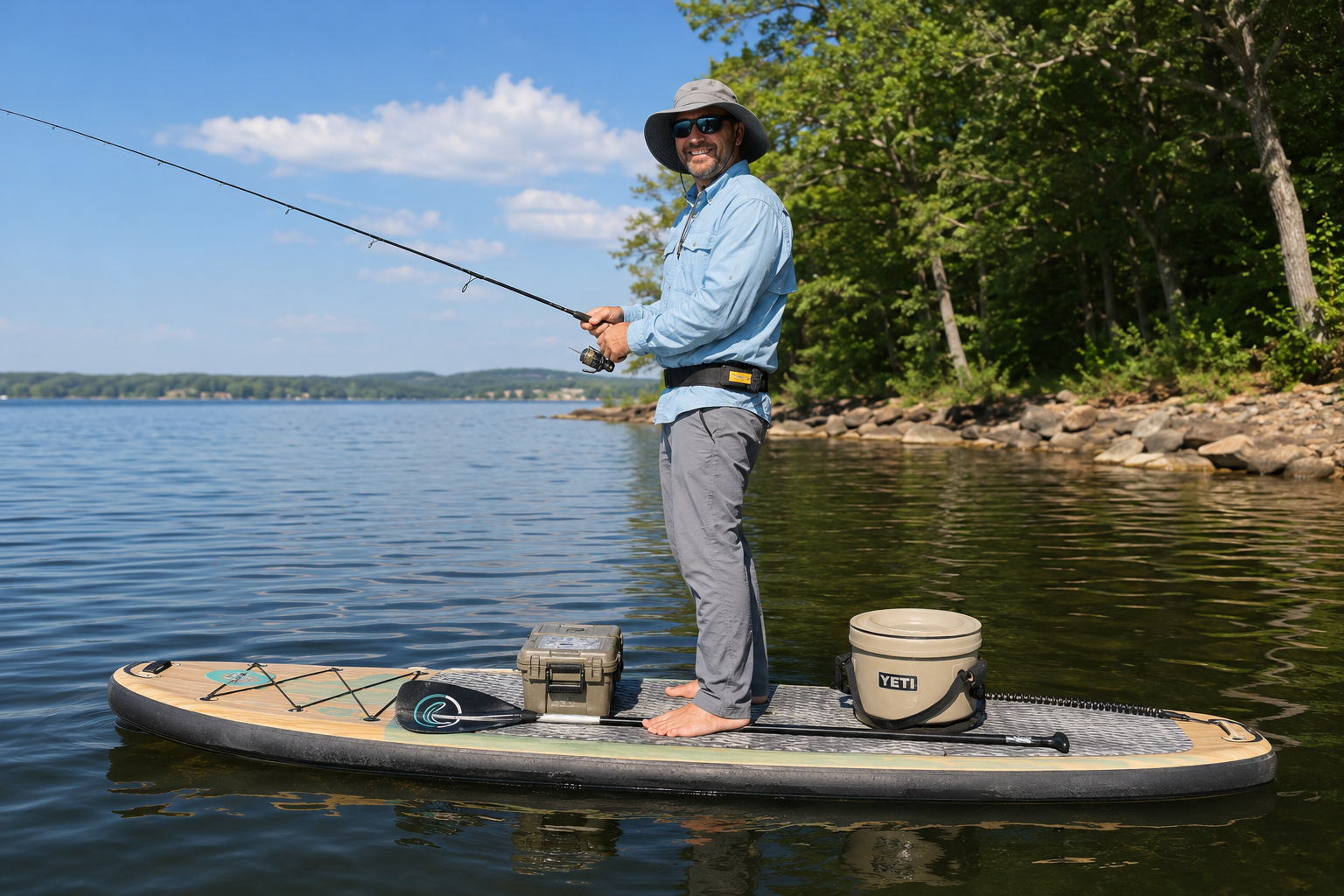
Why Bother
A paddle board gets you into water a boat can't touch. Skinny creeks, flooded flats, the backs of coves where the big ones hide because nobody bothers them. You're standing above the surface instead of sitting at water level, so you can actually see fish holding near structure before you cast to them. That alone changes how you fish.
It's also just cheaper. No trailer, no ramp fees, no engine maintenance. Strap the board to your roof, drive to the water, paddle out. You're fishing in the time it takes most boat owners to back down the ramp.
And honestly, it's a better workout than sitting in a bass boat pretending you're not checking your phone. You're balancing, paddling, casting, all at once. It sharpens you as a paddler too, since fighting a fish from a standing position forces real control.
None of this means SUP fishing replaces a boat. If you need speed, range, or serious storage, get a boat. But for a lot of water, especially calm lakes, slow rivers, and protected bays, a board does the job better.
What You Actually Need
You don't need a dedicated fishing SUP to try this out. Start with what you've got. A few things matter more than others.
Stability first. Standing to cast and fighting a fish both demand a board that won't dump you the second you shift your weight. Wider is better here. Anything under 32 inches wide is going to test your patience fast.
A way to anchor your gear. Bungee decking, a milk crate strapped down, a cooler with a rod holder zip-tied to it. It doesn't need to be pretty. It needs to keep your tackle from becoming lake decoration.
A leash, always. For your board and honestly for your rod too if you can manage it. Losing a board in current is a bad day. Losing your only rod is worse.
Start on flat water. A pond, a slow river bend, a protected cove. Learn how the board handles when you plant your feet wide for a cast, and how it reacts when a fish starts pulling. Kneel if you need to fight something bigger. There's no rulebook that says you have to stand the whole time, and no fish cares either way.

The Gear You'll Actually Use
You don't need a tackle shop's worth of stuff to start. Keep it simple and add on once you know what you're missing.
A shorter rod. Anything over seven feet gets awkward when you're standing on an unstable platform with limited swing room. A five and a half to six and a half foot rod gives you enough control without smacking the water on your backcast.
A small tackle box, not a tackle bag. You have limited deck space and zero desire to watch your gear float away. A compact waterproof box that fits in a crate or bungee strap does the job.
A stringer or a small cooler, if you're keeping fish. Figure out your storage before you're standing over a flopping fish deciding where it goes.
Pliers and a line cutter, clipped to something. You will drop these in the water at least once if they're not attached to you or the board.
A dry bag for your phone and keys. Not optional. You will end up in the water eventually, on purpose or not.
That's genuinely enough to start. Everything else, from rod holders to fish finders, is an upgrade you make once you know you're hooked.
Boards Worth Looking At
If you're ready to get a board built for this instead of duct-taping accessories to your all-around SUP, look for models with a wider stance, multiple mounting points, and enough weight capacity to handle you plus a cooler plus gear. Depending on how serious you're getting, check out the full line of fishing SUPs from BOTE. The BOTE Rackham Gatorshell APEX is top tier and designed to catch that prized bass in your local lake.
Worth It or Not
If you already paddle and you already fish, the overlap is obvious and the barrier to trying it is basically zero. Grab a board you already own, tie a milk crate to the deck, and go find out for yourself before you spend money on gear built specifically for it.
If this helped you get out on the water, go put it to use.
