
Wetsuit vs Drysuit
What to Wear for Cold-Weather SUP
There’s a moment every paddler eventually faces, that first fall into frigid water that makes your soul briefly leave your body. It’s also the moment you realize that what you wear on the water in summer is absolutely not going to cut it come late November.
Cold-weather paddling is incredible. Quiet waters, no crowds, that crisp air that makes coffee taste better afterward. But it comes with a big question: Do you wear a wetsuit or a drysuit? And check out our recommendations at the end.
How They Work
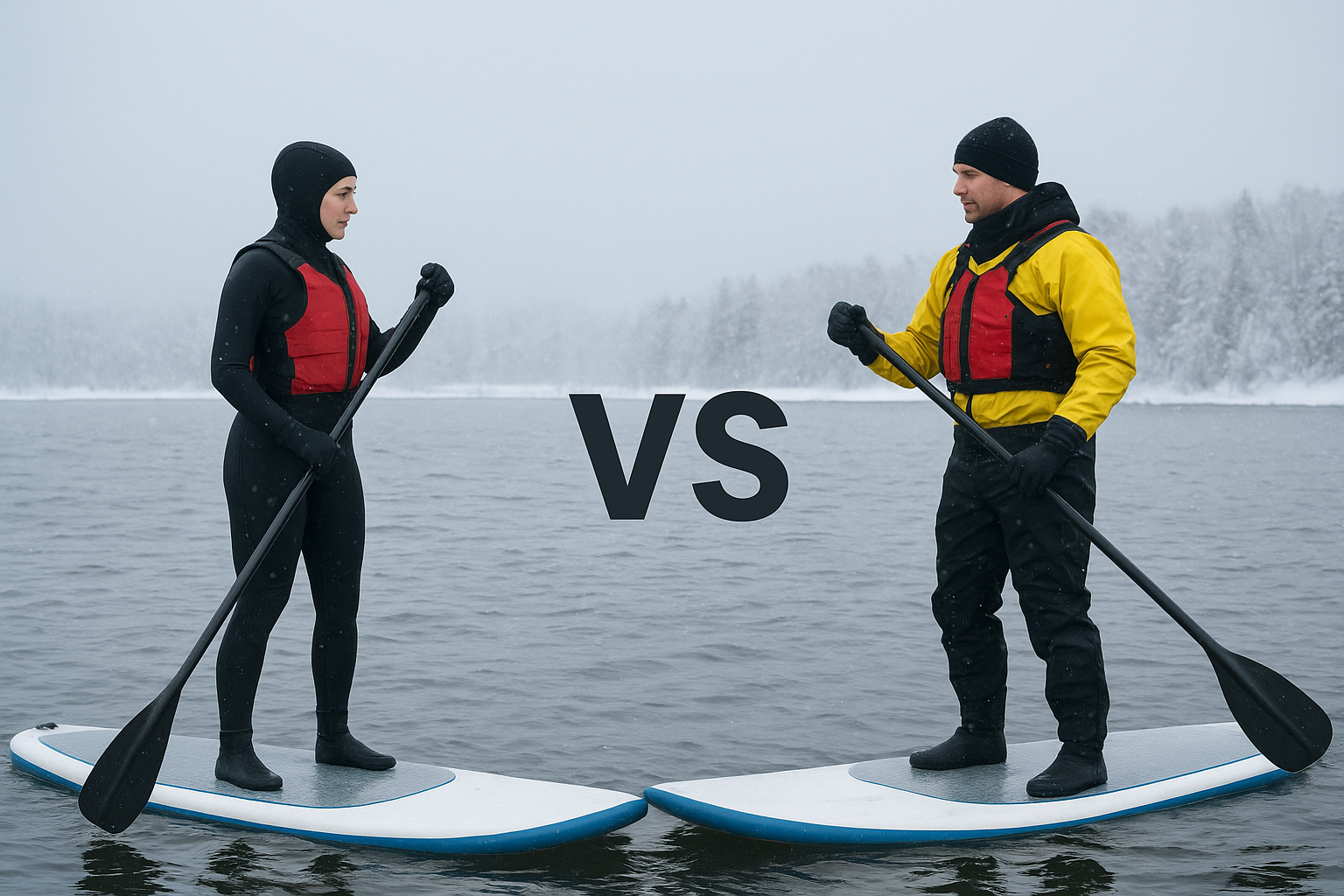
Wetsuits are made of neoprene, a stretchy rubber material that traps a thin layer of water between the suit and your skin. Your body warms that water, creating insulation. They’re snug, flexible, and surprisingly warm, as long as you’re in the water or splashing around.
Drysuits, on the other hand, keep you bone dry. They’re waterproof shells with tight seals at the wrists, neck, and ankles. You wear warm layers underneath, just like dressing for winter hiking. If you fall in, no water gets in, period.
Think of a wetsuit as a warm, wet hug and a drysuit as a waterproof bubble of comfort.
When to Use Each
Remember you want to dress for the water temperature not the air temperature. We have all be tricked by those random sunny December days only to realize the water temp is in the 50’s.
Water temp is above 55º
✅ Wetsuit is a good choice.
⚪ A DrySuit might be a bit overkill
Water temp is below 50º
⚠️ Wetsuit is possible, but potentially really chilly
✅ A Drysuit is ideal for most scenarios
If you plan on falling in a lot (surf, play, training, etc..)
✅ A wetsuit is a good choice because you will be moving on and off the board so mobility is idea
(Be sure to get the right thickness of wetsuit for the water temperature)
⚪ Not necessary but will still work if you have one
Flat water or long distance paddling (where you will probably not fall off)
⚪ A wetsuit can get cold sitting still
✅ the Drysuit will keeps you comfortable for hours
Budget Friendly
✅ Wetsuits are generally cheaper
⚪ Drysuits are definitely an investment
Easy Mobility
✅ Wetsuits are more flexible and provide more mobility
⚪ Drysuits are slightly bulkier but that is what makes them warmer
If you’re just cruising on calm water, a drysuit is the safer bet when it’s truly cold. But if you’re more active, surfing, racing, or paddling hard, a wetsuit might actually feel better since you’ll be generating more heat.
Fit and Layering
A wetsuit should fit like a second skin. If it’s loose, cold water will flush through and ruin the insulation. Skip thick layers underneath; wear a thin rash guard or nothing at all.
A drysuit needs room for layers but not so much that it balloons with air. Think moisture-wicking base layer + light fleece or wool mid-layer. Avoid cotton unless you enjoy staying damp all day.
Click here 👆 to shop for deals on wetsuits and drysuits- using this link will support the SUP Club
Gear Recommendations
Wetsuits
Budget: O’Neill Reactor II 3/2mm – a solid entry-level option under $150 that works well for shoulder season paddling.
Mid-Range: O’Neil Hyperfreak 4/3mm – extra warmth and flexibility designed for paddlers, not surfers.
Premium: Patagonia R4 Yulex – top-tier warmth, eco-friendly materials, and built to last for years.
Drysuits
Budget: Level Six – excellent value with solid waterproofing for the price.
Mid-Range: NRS Crux – durable, reliable, and comfortable enough for long paddles.
Premium: Kokatat Idol GORE-TEX – the gold standard for serious paddlers who paddle year-round and want bombproof protection.
Quick Decision Guide
If you’re wondering which is right for you, here’s the short version:
Choose a wetsuit if: You’re paddling in moderately cold water, expect to fall in, or want more flexibility and a lower price tag.
Choose a drysuit if: You’re paddling in near-freezing water, staying on the board most of the time, or value staying completely dry and comfortable for long sessions.
Final Thoughts
The bottom line: both wetsuits and drysuits have their place. The trick is knowing what kind of paddler you are and what conditions you’re getting into. Cold-water paddling is one of the best ways to extend your season, but the right gear is the difference between a peaceful winter paddle and a miserable one.
So layer up, zip tight, and get out there, safely.
Check out our favorite cold-weather suits here (affiliate links coming soon), and if you’ve ever had a “cold feet” story of your own, share it in the comments. You’re in good company.

Shop all your paddling needs at REI using this link to support this blog
